
Brazil may be known as a popular vacation destination for its beautiful beaches and tropical weather, but it is also home to a bustling community of discrete mathematicians promoting a particularly ‘magical’ field: combinatorics. Among them is ISTA alum Walner Mendonça, who now teaches as an assistant professor at the Federal University of Ceará in his hometown of Fortaleza.

Combinatorics focuses on combinations and arrangements of finite structures, which were just like complicated puzzles to Walner. “The problems are easy to understand, but the solutions can be really hard, and the techniques can feel almost like magic.” Walner had studied and researched exclusively in Brazil through his PhD and was looking to gain experience in a different setting. At the same time, Matthew Kwan was setting up his research group at ISTA. “The pandemic had made finding positions and securing visas quite challenging. Matthew is a pretty well-known guy in the combinatorics field and when he reached out to my PhD advisor about an open position, I jumped at the opportunity.” In just two months, he was heading North of the equator to ISTA to join the Kwan group as its second member and first postdoc.
Though Austria and Brazil are in different hemispheres, Walner did manage to stay connected to Brazilian culture not too far from campus. “When I first arrived at ISTA, I was temporarily living on campus and would often go to this pizzeria on the weekends by myself. There was a group of locals who I would often run into and it turns out they knew some Brazilian songs.” The group asked the owner to change the music on the speakers, and in a small restaurant in the hills of Klosterneuburg, they would sing Brazilian songs into the night.
He spent the next year at ISTA working intently on combinatorics problems and techniques, learning as much as he could in this new environment before ultimately heading back to Brazil. As an assistant professor, it is his goal to open the doors of combinatorics to new students and to expand the reach of the field. “There is a somewhat large community of combinatorics professors in Brazil working in São Paulo, Rio de Janeiro, Fortaleza, Salvador, and a few other cities and regions. These classes are often electives, and we work hard to make the field more accessible and excite students about its possibilities.”
Walner is one of several organizers of an annual combinatorics conference in Brazil, which will be held in Fortaleza this year. “We really want to attract new students and try to make it easier for them to attend.” He and other organizers find and apply for grants to cover the registration fee for students and offer financial support to those traveling from further parts of the country. It is his goal for others to feel the same magic he feels in his work. “I love academia a lot and really hope that more will see combinatorics as a field they can pursue and enjoy.”

The ISTA Alumni Award honors the outstanding achievements of those who have spent their PhD or Postdoc at ISTA and have moved on to careers elsewhere in academia or business. This year’s Alumni Award goes to Harold P. de Vladar, who was with the Institute from 2009 to 2013, as one of the first postdocs. “Harold is a perfect example of a scientist who turned a need he observed in the lab into a business opportunity and then acted upon it in a very impressive way,” says Markus Wanko, Managing Director of xista, the tech transfer ecosystem of ISTA, where Vladar’s entrepreneurial career took off. This is also underlined by ISTA professor Nick Barton, with whom Vladar cooperated also after his PostDoc: “Harold gives an outstanding example of how fundamental research can translate into practical application.”
The Hungaro-Venezuelan Vladar is the founder and until recently CEO of Ribbon Biolabs. The company, that has attracted funding from several investors, is developing methods for the automated synthesis of long strands of DNA consisting of over 5,000 base pairs. These DNA molecules are needed in a wide range of applications across research, drug discovery, and synthetic biology. “Establishing Ribbon Biolabs is, of course, one of my biggest achievements,” Vladar states. “Currently, I am starting my second company. I see myself doing this again and again, taking on scientific challenges that can be developed into technologies that bring benefits to industry or society.” This drive for growth is something that connects him with ISTA: “I worked with such amazing people at the Institute. I like to think of ISTA as a metaphor for development and growth: My first office was a in the facility management on the top floor together with another couple of Postdocs, and now I see a growing campus that is immensely beautiful. This inspires me,” he says. “I want to give the message to the current graduates to think big and to act big in whatever you want to achieve in life”.
—
The ISTA Alumni Award was presented at the 2024 Graduation Ceremony.
As ISTA graduates and postdocs move on to new horizons around the globe, they join the ranks of professors, lead research groups, start companies, or go on their individual paths to success. In less than 15 years, the global network of ISTA alumni has grown to include respected scientists, corporate leaders, and outof-the-box innovators in industrial research and development. ISTA is committed to maintaining an active connection with and nurturing this growing network of bright minds.
ISTA alumni are global ambassadors of the pioneering spirit of the Institute and its researchers. Many are engaged in academic pursuits, including those who have secured faculty positions at renowned universities and research centers. Furthermore, numerous alumni have chosen to transition into roles in business and industry. This year, we share the stories of three alumni who have built on their experience at ISTA and made an impact in their diverse fields.

Embryogenesis: Patterns and shapes in development
Among the ISTA alumni who have contributed to growing the Institute’s global network is cell and developmental biologist Diana Pinheiro. After her PhD at the Institut Curie in France, where she researched cellular and tissue morphogenesis in Drosophila pupae, Pinheiro joined ISTA’s Heisenberg group as a postdoc in 2017. There she switched from flies to fish and investigated the development of zebrafish embryos. In 2022, she started her own research group at the Research Institute of Molecular Pathology (IMP), a part of the Vienna BioCenter, and received an ERC Starting Grant in 2023. “For a cell to fulfill its function it doesn’t just need to differentiate, it also needs to be at the right place. My lab will explore how a relatively small set of highly conserved developmental signals is able to encode all this complex information—patterning and morphogenesis—to coordinate embryogenesis across scales,” said Pinheiro upon starting her group.

Giving physics a hand – through mathematics
Another ISTA alumna who has embarked on a career in academia at a world-renowned institution is mathematical physicist Simone Rademacher. In 2019, Rademacher joined the Seiringer group at ISTA as an ISTplus postdoctoral fellow after completing her PhD at the University of Zurich Switzerland, where she studied the mathematical properties of many-body quantum systems. In 2022, she joined the Mathematical Institute of the LMU Munich in Germany as a deputy professor in the Stochastics and Financial Mathematics research group. “I am interested in the mathematical analysis of both many-body quantum systems, such as bosonic and fermionic systems and the polaron, and their effective equations. On the one hand, I study the mathematical description of BoseEinstein condensates using central limit theorems and large deviation principles. On the other hand, I am working on the properties of the effective equations for polaron models and their derivation from the many-body quantum systems,” says Rademacher.
An ISTA Alumni Award recipient at Google Research
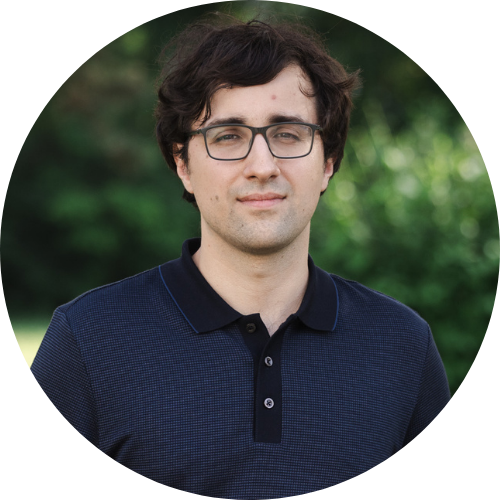
What the future can hold for excellent PhD students after graduating from ISTA is shown by the example of Alexander Kolesnikov: He received his PhD in 2018, is currently working at Google Research in Zurich, Switzerland, and received this year’s ISTA Alumni Award, which is given to outstanding former ISTA researchers. During his PhD in the Lampert group, Kolesnikov focused on designing computer systems that can automatically learn to analyze and understand visual information, such as images or videos. “The crux of my research is to improve the efficiency with which computers learn to interpret visual data from examples,” Kolesnikov explains. Having become a highly cited scientist in his field in less than five years after completing his PhD, Kolesnikov’s achievements have been duly recognized. “The ISTA Alumni Award recognition has a special meaning for me”, said Kolesnikov, “because ISTA has played a pivotal role in shaping me as a scientist.”
—
This piece was originally featured in the ISTA Annual Report 2023.