
Matthee Group
Astrophysics of Galaxies
Galaxies such as our own Milky Way are the largest bound structures in our Universe and consist of gas, stars, planets, black holes and dark matter. The astrophysical processes that occur in galaxies happened to every atom in our body and therefore teach us about our own cosmic origins. The Matthee group investigates the physical mechanisms that determine how galaxies and their constituents form and evolve using observations of the very distant Universe.
Galaxies form following the collapse of small perturbations in the initial density distribution that formed in the Big Bang. While the physics of gravitational collapse is well understood, detailed feedback processes that happen within galaxies, such as the formation of stars, supernova explosions and the growth of supermassive black holes are poorly understood, while they have significant impact on the fate of galaxies and the stars and planets within them. The Matthee group uses observations of galaxies in the distant Universe to look back in time and probe the properties of the young massive stars in these galaxies responsible for the creation of the majority of heavy elements and the production of most of the ionizing radiation in the early Universe, and their impact on interstellar gas clouds. Matthee uses the largest telescopes on Earth (such as ESO’s Very Large Telescope in Chile) and in space (such as NASA/ESA/CSA’s James Webb Space Telescope) to find and study the first generations of galaxies and focus on empirically mapping the interplay between these galaxies and intergalactic gas in the so called reionization epoch that was the last major phase transition of matter in the Universe and happened only a few hundred million years after the Big Bang. Matthee also uses large cosmological hydrodynamical simulations to investigate the relation between structure formation, galaxies’ growth rates and their imprints on chemical enrichment.
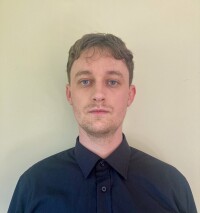
Group Leader

Administrative Support
Team


The Matthee group can host postdoctoral fellowships.
Please contact jorryt.matthee@ista.ac.at in case you are interested.
Current Projects
Galaxies as tracers and agents of cosmic reionization
The Matthee group involved in several programs using the infrared capabilities of the JWST to identify young emission-line galaxies in the early Universe through Halpha and [OIII] emission. We will use these measurements to accurately investigate:
- the amount of star formation in the early Universe,
- the metal-enrichment process in and around early galaxies
- the connection between galaxies and intergalactic gas
Matthee is leading an ERC StG to measure the total ionising budget from young galaxies in the early Universe and self-consistently trace the topology and timing of cosmic reionization. In addition to JWST data, this project also benefits from ground-based observations of the Lyman-alpha emission line from galaxies which traces when and by how much galaxies leak ionizing photons.
The properties of the first stars and black holes in the first galaxies
In the future, the Matthee group will build upon the galaxies identified in the current projects and plans to use extremely sensitive observations, for example with the Extremely Large Telescope, to measure the temperatures, masses and chemical compositions of the first generations that formed in the Universe.
Publications
McConachie I, de Graaff A, Maseda MV, Leja J, Zhang Y, Setton DJ, Bezanson R, Boogaard LA, Brammer G, Cleri NJ, Cooper OR, Glazebrook K, Gottumukkala R, Greene JE, Goulding AD, Hirschmann M, Khullar G, Labbe I, Lewis Z, Matthee JJ, Miller TB, Naidu RP, Nanayakkara T, Nelson EJ, Oesch PA, Price SH, Suess KA, Wang B, Whitaker KE, Williams CC. 2026. Where galaxies go to die: The environments of massive quiescent galaxies at 3 < z < 5. The Astrophysical Journal. 1011(2), 172. View
Nakane M, Kokorev V, Fujimoto S, Ouchi M, Mcleod DJ, Golubchik M, Oguri M, Zitrin A, Bondestam C, Donnan CT, Brammer G, Finkelstein SL, Willott C, Rihtaršič G, Desprez G, Adamo A, Vanzella E, Bradač M, Messa M, Yanagisawa H, Sun F, Ferguson HC, Lucas RA, Coe D, Richard J, Abdurro’Uf U, Akins HB, Allingham JFV, Amorín RO, Asada Y, Atek H, Bauer FE, Bezanson R, Bradley LD, Chisholm J, Conselice CJ, Dayal P, Dessauges-Zavadsky M, Diego JM, Faisst AL, Farley G, Fei Q, Frye BL, Fudamoto Y, Furtak LJ, Harikane Y, Hsiao TYY, Jiménez-Teja Y, Kartaltepe JS, Kiyota T, Koekemoer AM, Del P. Lagos C, Magdis GE, Meena AK, Mowla L, Noirot G, Oesch PA, Ono Y, Ortiz R, Pan R, Papovich C, Pierel JDR, Ricotti M, Robbins L, Schaerer D, Schneider R, Treu T, Valentino F, Windhorst RA, Bromm V, Egami E, González-Otero M, Kohno K, Labbe I, Matthee JJ, Mun M, Naidu RP, Tripodi R. 2026. VENUS: A strongly lensed clumpy galaxy at z ∼ 11–12 behind the galaxy cluster MACS J0257.1-2325. The Astrophysical Journal. 1010(2), 237. View
Brinch M, Ibar E, Ossa-Fuentes L, Pirie C, Best P, Cochrane RK, Duncan K, Dunlop J, Flury S, Hale C, Matthee JJ, McLeod D, Selfridge J, Sobral D, Stephenson H, Stott JP, Swinbank AM. 2026. The JWST Emission Line Survey: Multi-wavelength properties of Paschen line emitters at cosmic noon. Astronomy & Astrophysics. 714, A477. View
Stephenson MG, Chisholm J, Saldana-Lopez A, Matthee JJ, Henry A, Naidu RP, Flury SR, Hutchison TA, Finkelstein SL, Guseva NG, Izotov YI, Marques-Chaves R, Oesch PA, Reddy NA, Schaerer D. 2026. The evolution of low-ionization electron densities in galaxies across cosmic epochs. The Astrophysical Journal. 1010(2), 184. View
Fei Q, Fujimoto S, Brammer G, Li R, Ho LC, Bromm V, Álvarez-Márquez J, Asada Y, Barro G, Colina L, Dayal P, Finkelstein SL, Fynbo JPU, Ginolfi M, Inayoshi K, Kokorev V, Leung GCK, Matthee JJ, Meyer RA, Naidu RP, Onoue M, Pérez-González PG, Steinhardt CL, Valentino F, Walter F, Xiao M, Zhang H. 2026. Direct pathway to the early supermassive Black Holes: A red super-Eddington quasar in a massive starburst host at z = 7.2. The Astrophysical Journal. 1010(1), 86. View
ReX-Link: Jorryt Matthee
Career
Since 2023 Assistant Professor, Institute of Science and Technology Austria (ISTA)
2018-2023 Postdoctoral researcher (Zwicky Fellow), ETH Zurich, Switzerland
2018 PhD, Leiden University, The Netherlands
Selected Distinctions
2022, ERC Starting Grant
2020, MERAC Prize for best PhD Thesis in Observational Astrophysics
2019, IAU PhD Prize, Division J Galaxies and cosmology, International Astronomical Union
2019, C.J. Kok Jury Award, Best PhD thesis, Science Faculty, Leiden University
Additional Information
Download CV
Matthee Group Website
Astronomy and Astrophysics at ISTA

